Clear aligners have come a long way. What started as bulky metal braces evolved into thermoformed plastic trays, and now there’s a new approach: 3D-printed aligners printed directly in our Clemson and Seneca offices using advanced 3D printing technology.
This shift matters. Direct-printed aligners offer a level of precision, comfort, and speed that older methods simply can’t match. At Upstate Orthodontics, Dr. Mark McInnis, orthodontist, and our team use in-office 3D printing to craft aligners built specifically for your smile, without the long wait times of outside labs. Patients across the region get a modern, tech-forward experience from their first scan to their final tray.
Below, we break down how the process works, what makes it different, and what you can expect from start to finish.
What Are 3D-Printed Aligners?
3D-printed aligners are clear orthodontic trays built layer by layer from biocompatible resin using a high-resolution 3D printer, based on a digital model of your teeth. Unlike traditional aligners, which are made by heating and pressing plastic sheets over physical molds, direct-printed aligners are formed directly from your digital scan.
The result? A tray that fits more precisely, feels smoother against your gums, and applies force more evenly across your teeth.
Here’s how they compare to thermoformed options like Invisalign:
- Material: Direct-printed aligners use specialized dental resins engineered for controlled tooth movement. Thermoformed aligners use pre-made plastic sheets.
- Fit: Printed trays match your digital scan with impressive accuracy. Thermoformed trays can shift slightly during the molding process.
- Production: Printed aligners can be made in our office. Thermoformed aligners are typically manufactured at an off-site lab.
This newer approach gives Dr. McInnis more control over each stage of your treatment.
Step-by-Step: How We Create Your Custom Aligners
Curious about what happens behind the scenes? Here’s the full workflow from your first visit to your first tray.
Step 1: Digital Intraoral Scan
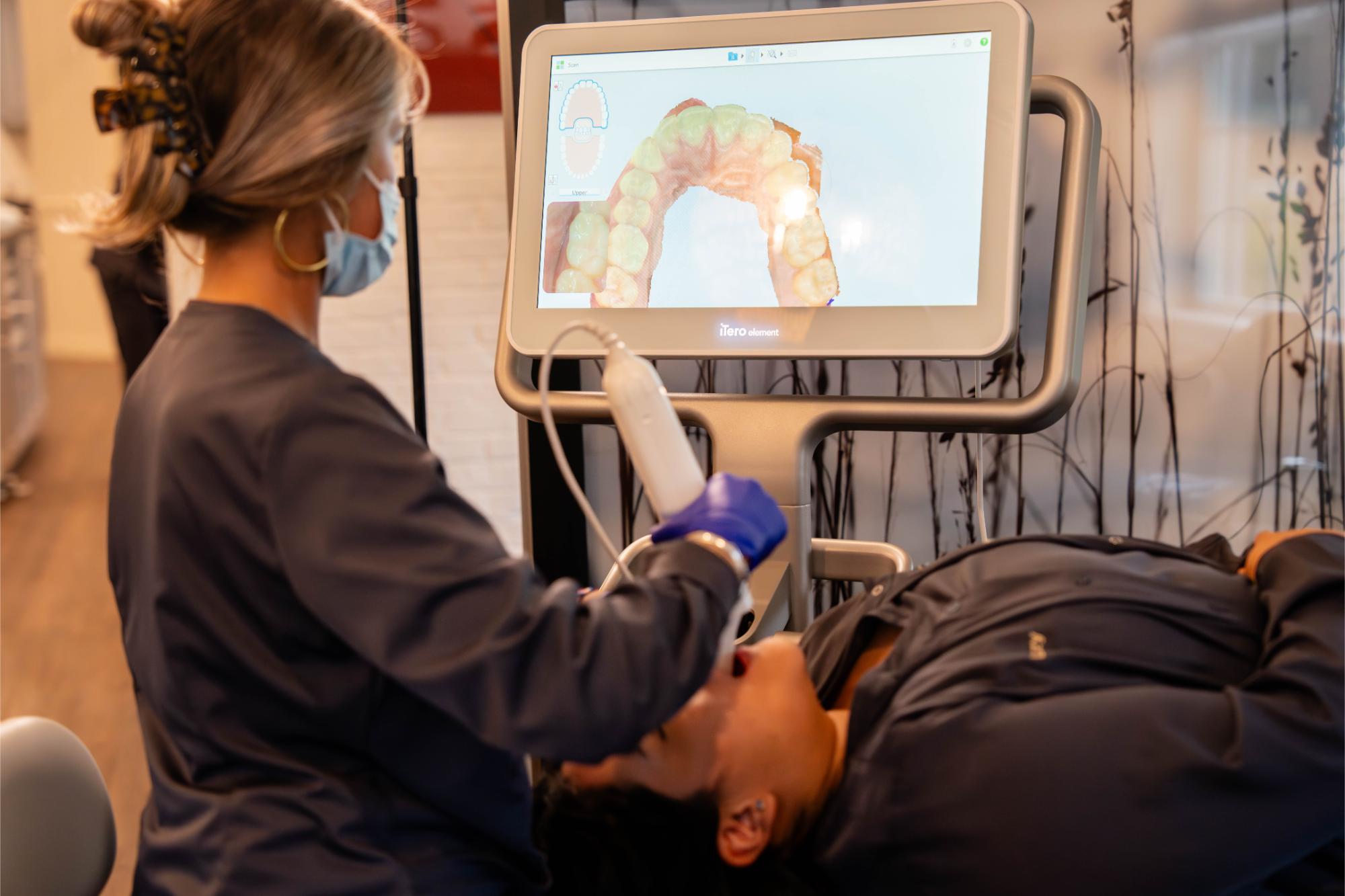
No goopy impressions here. We use a handheld intraoral scanner to capture a detailed 3D model of your teeth in just a few minutes. The scan is comfortable, quick, and remarkably accurate.
Step 2: Custom Treatment Planning
Next, Dr. McInnis reviews your scan using specialized CAD software. He maps out how your teeth will move, one stage at a time, and designs each aligner to guide that movement. You’ll see a preview of your projected results before treatment even begins.
Step 3: In-Office 3D Printing
Once the plan is approved, your aligners are printed right here in our office using a high-resolution resin printer. Each tray is built layer by layer with microscopic precision.
Step 4: Curing, Finishing, and Quality Check
After printing, aligners go through a curing process to strengthen the resin. Our team then trims, polishes, and inspects each tray to make sure it meets our standards.
Step 5: Fitting and Delivery
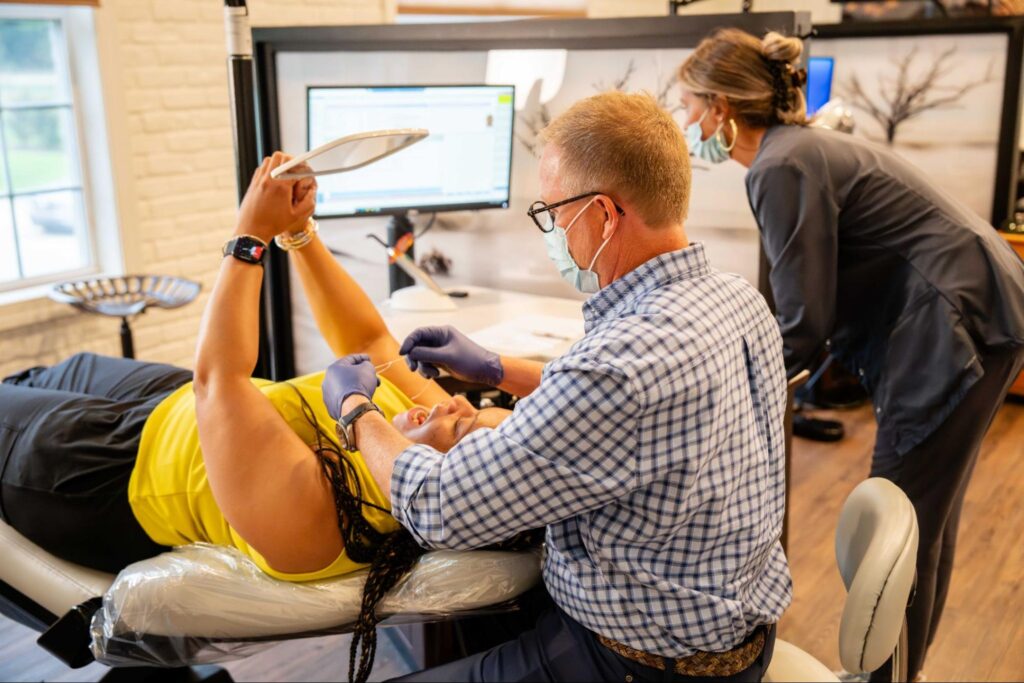
You’ll come in to try on your first set of aligners. Dr. McInnis checks the fit, answers your questions, and walks you through how to wear and care for them.
From scan to finished tray, the entire process can move faster than traditional aligner production because everything happens under one roof.
The Technology Behind the Process
Several tools work together to make in-office aligners possible right here at Upstate Orthodontics:
- Intraoral scanners replace messy putty impressions with digital scans that capture every ridge and curve of your teeth.
- AI-assisted planning software helps map out precise tooth movements and predict how your smile will change over time.
- High-resolution resin 3D printers produce aligners with the accuracy needed for effective orthodontic movement.
- Digital records are stored securely, making it easy to adjust your plan if anything changes during treatment.
Having these tools in-office means we can respond quickly. If a tray needs to be reprinted or your plan needs a tweak, we don’t have to wait on an outside lab.
Benefits of 3D-Printed Aligners Over Traditional Options
Why are more orthodontists moving toward direct-printed aligners? The advantages are clear.
- Faster turnaround. In-office printing means shorter wait times between visits.
- Improved precision. Digital design and printing reduce the small errors that can happen during thermoforming.
- Better comfort. Smoother edges and a more accurate fit mean less irritation.
- Greater control. Custom resin properties allow for more predictable tooth movement.
- Less waste. Direct printing produces only what’s needed, reducing plastic waste from traditional molds.
Here’s a quick comparison:
| Feature | 3D-Printed Aligners | Invisalign (Thermoformed) |
|---|---|---|
| Production location | In-office | Off-site lab |
| Material | Biocompatible resin | Thermoformed plastic |
| Fit precision | Very high | High |
| Turnaround time | Faster | Standard |
| Edge smoothness | Smoother | Standard |
Both options can create beautiful results. The right choice depends on your specific smile goals, which is something Dr. McInnis will walk through with you at your free consult.
Are You a Candidate for 3D-Printed Aligners?
3D-printed aligners work well for a wide range of patients throughout the Upstate, including cases with:
- Mild to moderate crowding
- Spacing or gaps between teeth
- Minor bite concerns
- Relapse after previous orthodontic treatment
Both teens and adults can be great candidates. That said, more complex cases, such as significant bite corrections or severe rotations, may benefit from metal braces or clear braces instead.
The only way to know for sure is to schedule a visit. Dr. McInnis will evaluate your smile, review your goals, and recommend the option that fits you best.
What to Expect During Treatment
Once you start wearing your aligners, here’s what a typical experience looks like:
- Treatment length: Most patients complete treatment in 6 to 18 months, though timelines vary based on your case.
- Wear schedule: Aligners should be worn 20 to 22 hours a day, removing them only to eat, drink (anything other than water), and brush.
- Check-ins: You’ll visit us every 6 to 10 weeks so Dr. McInnis can track your progress and hand off your next sets of trays.
- Care and cleaning: Rinse your aligners with cool water, brush them gently with a soft toothbrush, and avoid hot liquids that can warp the resin.
Digital records make it easy to compare your progress to the original plan and make small adjustments along the way.
Frequently Asked Questions
How are 3D-printed aligners made?
They’re created from a digital scan of your teeth, designed using CAD software, and printed layer by layer from biocompatible resin. After printing, each tray is cured, polished, and inspected before you wear it.
Are 3D-printed aligners better than Invisalign?
Both can straighten teeth effectively. 3D-printed aligners often offer a more precise fit, smoother edges, and faster turnaround thanks to in-office production. The best choice depends on your specific case.
How long does treatment with 3D-printed aligners take?
Most treatments take 6 to 18 months. Simpler cases may wrap up in a few months, while more involved ones can take longer. Dr. McInnis will give you a personalized estimate at your first visit.
Are 3D-printed aligners more comfortable than traditional aligners?
Many patients find them more comfortable. The precise fit and polished edges reduce rubbing against your gums and cheeks, and the resin material tends to feel smoother than thermoformed plastic.
How much do 3D-printed aligners cost at Upstate Orthodontics?
Pricing depends on the complexity of your case and the length of treatment. Upstate Orthodontics offers flexible financing options to make treatment easier to plan for. We’ll go over everything at your free consult, no surprises.
Schedule Your Free Consultation at Upstate Orthodontics
Ready to see if 3D-printed aligners are the right fit for your smile? Dr. Mark McInnis and our Upstate Orthodontics team would love to meet you. With in-office 3D printing, digital scans, and flexible financing options, we make it easy to smile at every step.
Book your free consult today, and let’s start crafting the smile you’ve always wanted.