

Thinking about Invisalign for your teenager and wondering if it’s really the right call before scheduling that first visit? You’re in the right spot. Choosing between clear aligners and braces can feel like a lot, especially when you’re trying to balance your teen’s social life, sports schedule, academics, and long-term smile health all at once. This guide walks you through how Invisalign Teen works, how it stacks up against braces, and whether your teenager is a good fit for aligners. Our goal is to give you honest, parent-friendly information so you can have a confident conversation at home before any decisions get made.

What Is Invisalign Teen?
Invisalign Teen is a clear aligner system designed specifically for adolescents. It uses a series of personalized, BPA-free plastic trays to gently shift teeth into place, with special features built around a teen’s growing smile and busy lifestyle.
Here’s what sets it apart from standard adult Invisalign:
- Blue compliance indicators on each aligner fade with wear, so parents and your orthodontist can see if trays are being worn enough.
- Replacement aligners included (typically up to 6 per treatment) in case trays get lost at lunch or tossed with a napkin.
- Eruption tabs leave space for second molars and canines that are still coming in.
- Personalized fit for teen anatomy, not just a scaled-down adult version.
For many families at Upstate Orthodontics in Clemson and Seneca, these built-in features take a lot of the worry out of handing a teen responsibility for their own treatment.
How Invisalign Teen Treatment Works
Invisalign Teen treatment follows a clear, step-by-step process. From the first visit to the final retainer, Dr. McInnis guides each teen through a personalized plan built from a digital 3D scan of their teeth. Most teens complete active treatment in 12 to 18 months, depending on case complexity.
Here’s what to expect:
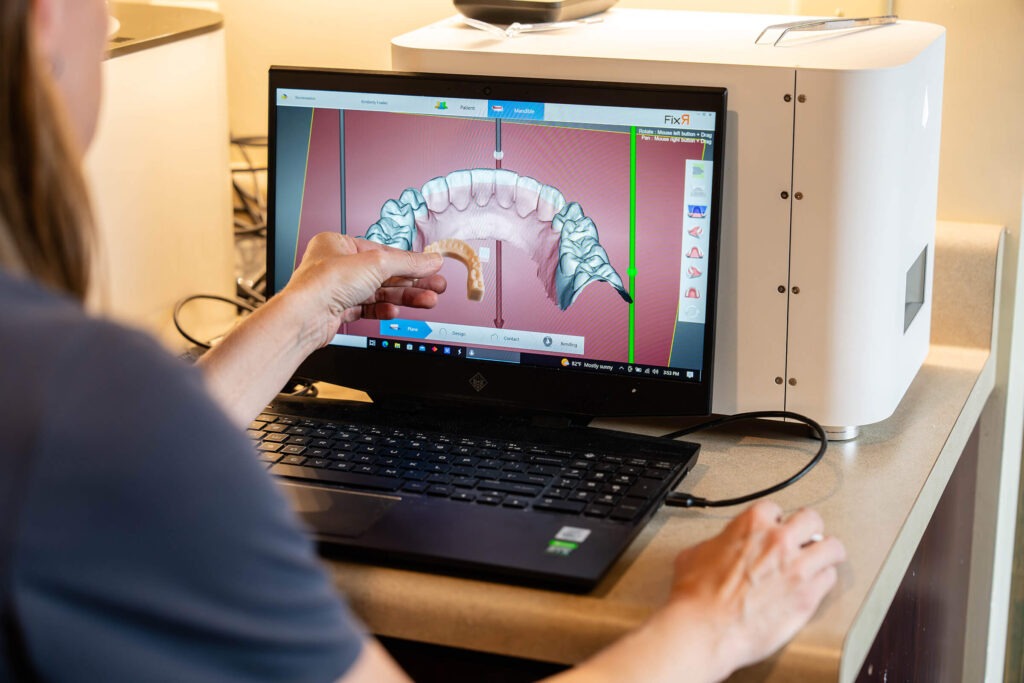
- Free consult and digital scan. Your teen’s first visit includes a full orthodontic exam and a digital scan of their teeth. No messy impressions, no gagging on trays.
- Personalized treatment plan. Dr. Mark McInnis maps out tooth movement and shows you a preview of the final smile before any aligners are made.
- Wearing the aligners. Your teen wears each set 20 to 22 hours a day, swapping to a new tray every 1 to 2 weeks as directed.
- Check-in visits. Short appointments every 6 to 10 weeks let our team confirm progress and hand off the next batch of aligners.
- Retainers. Once active treatment wraps up, retainers keep that new smile in place long-term.
Benefits of Invisalign for Teenagers
Clear aligners for teenagers offer real-world advantages that go beyond looks. For many teens, the flexibility is what makes treatment feel doable instead of disruptive. Below, we’ve broken the benefits into two common parent questions so you can see exactly where aligners shine.
How Does Invisalign Fit Into a Teen’s Daily Life?
The day-to-day experience is where parents and teens tend to notice the biggest difference compared to brackets and wires.
- Nearly invisible appearance. Classmates, teammates, and prom dates often don’t even notice the aligners. That matters a lot during the teen years.
- Removable for sports and music. Your teen can take aligners out for football practice, cheer, marching band, or trumpet lessons. No mouthguard fit issues, no reed trouble.
- No food restrictions. Popcorn at the game? Caramel at Halloween? Aligners come out for meals, so favorite foods stay on the menu.
- Confidence boost. Teens who feel self-conscious about braces often open up more socially with aligners.
Are Clear Aligners Easier to Care For?
Yes, and that matters a lot for teens who are still building strong hygiene habits.
- Easier brushing and flossing. No brackets or wires to work around means better hygiene and fewer white spots when treatment ends.
- Fewer emergency visits. No brackets to break or wires to poke, so unexpected trips to our office are rare.
- Smooth, comfortable plastic. Aligners don’t irritate cheeks and lips the way metal brackets sometimes can.
Invisalign Teen won’t be the right call for every case, but when it fits, the day-to-day experience is noticeably easier for the whole family.
Invisalign Teen vs. Braces: What’s Right for Your Teen?
Both options straighten teeth beautifully. The real question is which one fits your teen’s needs, personality, and clinical situation. Here’s a side-by-side comparison to help you talk it through at home.
| Feature | Invisalign Teen | Metal or Clear Braces |
|---|---|---|
| Appearance | Clear, nearly invisible | Visible metal or tooth-colored brackets |
| Compliance | Requires 20 to 22 hours of daily wear | Fixed, always working |
| Treatment scope | Mild to moderate cases | Handles complex bite and alignment cases |
| Hygiene | Remove to brush and floss normally | Requires special brushing around brackets |
| Food restrictions | None; remove to eat | Avoid hard, sticky, and chewy foods |
| Emergency visits | Rare | Possible for broken brackets or wires |
| Sports and instruments | Remove during activity | Mouthguard recommended for contact sports |
If your teen is self-motivated and the main goals are mild to moderate correction, Invisalign Teen often wins. For complex rotations, significant bite work, or teens who’d rather “set it and forget it,” metal braces or clear braces may be the better match. Dr. McInnis walks families through both during the free consult, so you don’t have to guess which option will actually work best. For a deeper comparison, see our guide to Invisalign vs. traditional braces.
Is Your Teen a Good Candidate?
Not every teen is an ideal fit for Invisalign Teen, and that’s okay. Dr. McInnis evaluates each smile individually to recommend the treatment that will deliver the best result.
Your teen is likely a strong candidate if:
- They have mild to moderate crowding, spacing, or bite issues that aligners can address.
- They’re responsible enough to wear trays 20 to 22 hours a day and keep them in a case when they’re not.
- Their permanent teeth are mostly erupted, with room for eruption tabs to accommodate any teeth still coming in.
- They’re motivated by the look and flexibility of clear aligners.
- You, as a parent, can offer gentle reminders and support during the first few weeks of adjustment.
Invisalign Teen may not be the right call for:
- Severe skeletal bite issues that require braces or additional appliances.
- Major tooth rotations that aligners can’t fully correct.
- Teens who genuinely won’t remember to wear their trays consistently.
A free consult at our Clemson or Seneca office is the easiest way to know for sure. We’ll give you an honest recommendation, whether that’s Invisalign Teen, clear braces, or metal braces. There’s never any pressure to move forward, just clear information so your family can decide what feels right.
Frequently Asked Questions
Does Invisalign Hurt?
Most teens feel mild pressure or tenderness for 1 to 2 days when starting a new aligner set. It’s a sign the teeth are moving as planned. Over-the-counter options and switching to new trays at bedtime usually keep any discomfort minimal, and many teens report that aligners feel gentler than the soreness that can come with brackets and wires.
What Happens If My Teen Loses an Aligner?
Lost trays happen, which is exactly why Invisalign Teen includes replacement aligners (typically up to 6). Call our office right away, and we’ll guide you on whether to move to the next set or request a replacement. Keeping the previous tray as a backup is always a smart habit.
Can Teens Eat Normally with Invisalign?
Yes. Aligners come out for every meal and snack, so there are no food restrictions at all. Your teen just needs to brush before putting trays back in to keep teeth and aligners clean. A travel toothbrush in the backpack makes this routine much easier at school.
Will Invisalign Affect Sports or Band?
Not much. Aligners can be removed for contact sports (with a mouthguard) or for playing wind instruments if they get in the way at first. Most teens adjust quickly and wear their trays during practice without issue, and many report that aligners are far easier to manage than brackets during athletics.
How Long Does Invisalign Teen Treatment Take?
Typical treatment runs 12 to 18 months, though some mild cases finish faster and complex ones take longer. Consistent daily wear is the biggest factor in staying on schedule, so those compliance indicators really do matter.
Can We Switch from Braces to Invisalign Mid-Treatment?
In some cases, yes. If your teen started with braces and wants to transition, Dr. McInnis can evaluate whether a switch makes clinical sense. We also accept transfer cases from other practices, so families new to the area are welcome too. Big smiles, zero pressure: that’s the approach we take with every family walking through our doors.