
If you’ve ever wondered whether your child should see an orthodontist before all their baby teeth fall out, you’re not alone. Many parents are surprised to learn that early evaluations start much sooner than they’d expect. “What is early (Phase 1) orthodontic treatment, and does my child need it?” is one of the most common questions we hear from families at Upstate Orthodontics, and the honest answer may put your mind at ease.
What Is Early (Phase 1) Orthodontic Treatment?
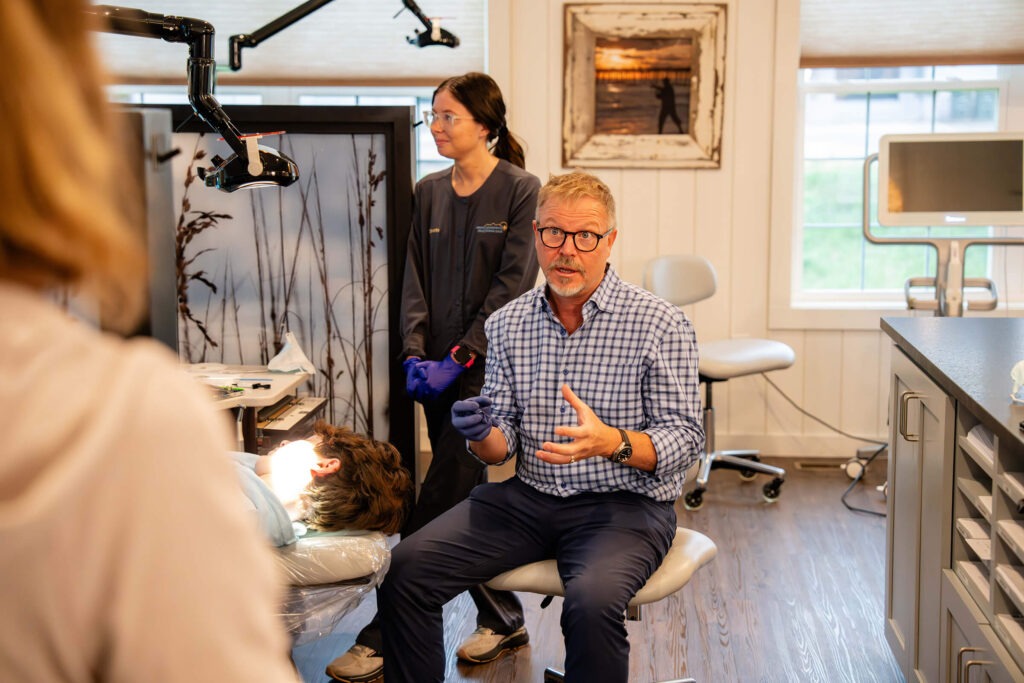
Phase 1 orthodontics, also called early interceptive orthodontics, is targeted care for children roughly ages 6 to 10 who still have a mix of baby and permanent teeth. The goal isn’t to straighten every tooth. Instead, Dr. Mark McInnis uses this window to guide jaw growth and tooth eruption while a child’s bones are still pliable and responsive.
Here’s what sets Phase 1 apart:
- It’s not full braces. Phase 1 treatment corrects specific developing concerns, not the entire bite.
- It works with growth. Young bones adapt more easily, so results come faster for certain issues.
- It’s recommended early. The American Association of Orthodontists (AAO) suggests every child have a first orthodontic evaluation by age 7. Learn more about when to book your first orthodontic appointment.
- It’s not for everyone. Only a small portion of children actually benefit from two-phase treatment.
At Upstate Orthodontics, we evaluate kids by age 7 to catch anything that would benefit from early guidance, but most children simply get a thumbs-up and a monitoring plan. A free consult with Dr. McInnis gives you clear answers without any push to start a smile journey right away.
How Phase 1 Treatment Works: Process, Timeline & Appliances
Phase 1 treatment typically lasts 9 to 15 months with visits every 6 to 10 weeks. It begins with a thorough exam and digital scans, uses targeted appliances to guide jaw and tooth development, and ends with a resting period while permanent teeth continue to come in. If a second phase is needed, it usually starts around ages 11 to 13.
Here’s what to expect step by step:
1. Initial Consultation
Your child’s first visit includes a growth and bite assessment, digital scans, and a conversation about what Dr. McInnis sees developing. Nothing is rushed.
2. Active Treatment (9–15 Months)
If Phase 1 is recommended, our team selects appliances based on your child’s specific needs. Common options include:
- Palatal expanders to widen a narrow upper jaw
- Space maintainers to hold room for incoming permanent teeth
- Partial braces on select teeth to correct alignment or bite concerns
- Invisalign First clear aligners designed for growing smiles
Visits every 6 to 10 weeks let us monitor progress and make small adjustments.
3. Resting Period (6–24 Months)
Once Phase 1 wraps up, your child wears a retainer and takes a break. This resting period gives the remaining permanent teeth time to erupt naturally into the space we’ve created.
4. Phase 2 (If Needed)
Around ages 11 to 13, Dr. McInnis re-evaluates. If full alignment is still needed, Phase 2 begins with braces or clear aligners. Many kids who complete Phase 1 have a shorter, simpler Phase 2 as a result of the groundwork we’ve already laid.
Benefits of Early Orthodontic Treatment
When Phase 1 is truly needed, the benefits can shape a child’s bite and smile for life. Timing matters here, because certain corrections are much easier before the jaw finishes developing.
Here’s what early treatment can accomplish:
- Guides jaw growth. Dr. McInnis can correct skeletal imbalances while the bones are still pliable, often avoiding more involved care later.
- Room for permanent teeth is created. Widening a narrow arch or holding space can reduce the need for extractions down the road.
- Crossbites and underbites get addressed. These bite issues rarely improve on their own and are much easier to address early.
- Harmful oral habits are interrupted. Persistent thumb sucking or tongue thrust can be addressed with simple appliances before they reshape the bite.
- Protruding front teeth are protected. Kids with teeth that stick out are more likely to chip or break them during sports and play.
- Phase 2 is often shortened. Groundwork laid during Phase 1 often means less time in braces as a teen.
- Confidence grows naturally. Kids who feel good about their smile at a young age carry that confidence into their school years.
Not every child needs these benefits, and that’s okay. For the small share of kids who do, early intervention can make a meaningful difference in both function and appearance.
Phase 1 vs. Phase 2: Understanding Two-Phase Orthodontic Treatment
Two-phase treatment separates early orthopedic work from later alignment of permanent teeth. Phase 1 focuses on how the jaw grows and where teeth will come in. Phase 2 focuses on the final position of every permanent tooth once they’ve all erupted. A resting period in between preserves the gains made during active care and allows the remaining teeth to erupt into position.
Here’s a side-by-side look:
| Feature | Phase 1 | Phase 2 |
|---|---|---|
| Typical Age | 6–10 years | 11–13+ years |
| Dentition | Mixed (baby + permanent) | All permanent teeth |
| Primary Goal | Guide jaw growth, create space, correct bite issues | Align all permanent teeth, perfect the bite |
| Common Appliances | Expanders, space maintainers, partial braces, Invisalign First | Full metal braces, clear braces, Invisalign |
| Duration | 9–15 months | 12–24 months |
| Focus | Orthopedic (bones) | Orthodontic (teeth) |
| Outcome | Foundation for easier future alignment | Final straightening and bite correction |
Traditional single-phase treatment waits until all permanent teeth are in, usually around age 11 to 13, and addresses everything at once. That approach works well for most kids. Two-phase treatment is only recommended when waiting would make the case harder or require more involved care later.
Does My Child Actually Need Phase 1 Treatment?
Most children don’t need Phase 1 treatment, and a professional evaluation is the only reliable way to know for sure. That said, there are specific signs that make an early visit worthwhile. Dr. McInnis looks for a combination of these during an age-7 evaluation.
The structural signs we pay closest attention to include a crossbite (where the upper teeth fit inside the lower teeth when biting down), an underbite (where the lower jaw sits in front of the upper jaw), severe crowding with no room for permanent teeth, and front teeth that protrude noticeably. Any one of these can be a reason to look closer.
Functional signs matter just as much. We watch for mouth breathing or snoring, difficulty chewing or biting food, speech patterns that may be related to tooth or jaw position, and a jaw that shifts to one side when your child closes their mouth. These everyday clues often tell us more than a quick visual exam.
Habit-related signs round out the picture. Thumb sucking that continues past age 5 and persistent tongue thrust affecting the bite are the two we see most often, and both can usually be addressed with simple appliances if caught early.
“Monitor-only” scenarios are far more common than active treatment. If your child has mild crowding, a small gap, or baby teeth that haven’t fallen out yet, waiting is often the smarter choice. Our Upstate Orthodontics team will tell you honestly when watchful waiting is the best plan.
Frequently Asked Questions About Phase 1 Orthodontics
When should my child first see an orthodontist?
The American Association of Orthodontists recommends a first orthodontic evaluation by age 7. By this age, enough permanent teeth have come in and enough jaw growth has happened for an orthodontist to spot developing concerns. Most kids won’t need treatment at this visit, but it establishes a baseline and timeline for monitoring.
What is considered severe malocclusion requiring early treatment?
Severe malocclusion generally includes significant crossbites, underbites, severe crowding, and front teeth that stick out far enough to risk injury. Functional concerns like difficulty chewing or jaw shifting also qualify. Dr. McInnis evaluates both skeletal and dental factors before recommending any early treatment.
What happens if we skip Phase 1 when it’s recommended?
Skipping recommended Phase 1 care doesn’t always cause harm, but it can make Phase 2 longer, more involved, or require extractions or jaw-related care that could have been avoided. Some issues like crossbites tend to worsen with growth. Dr. McInnis will explain the specific considerations for your child’s case so you can make an informed choice.
Is early orthodontic treatment safe for young children?
Yes. Phase 1 care is designed specifically for growing smiles and uses gentle, age-appropriate appliances. Visits are short, adjustments are mild, and our team works hard to make every visit comfortable for kids. The approach is conservative by design, and we only recommend crafting smiles this early when the benefit is clear.
How will I know Phase 1 is working?
You’ll see progress in measurable ways: a wider smile if an expander is used, straighter front teeth with partial braces, or a corrected bite that functions better. Dr. McInnis tracks progress at every visit with digital scans and clinical exams, and we share updates with parents so you always know where things stand.
Phase 1 treatment isn’t right for most kids, but for the children who genuinely need it, early care can make a real difference. A free consult at Upstate Orthodontics is the best way to get honest answers about your child’s smile, with no pressure to start a smile journey today. Our Clemson office at 201 Frontage Rd. and Seneca office at 693 S. Oak St. both welcome new families, and we’d love to meet yours.
Call our Clemson office at 864.654.7534 or our Seneca office at 864.888.3113 to schedule your child’s evaluation with Dr. McInnis.