

Our Upstate Orthodontics team has what you need to fix dental crowding issues. If you’ve ever looked in tHow to Fix Dental Crowding
Dental crowding occurs when there isn’t enough space in your jaw for all your teeth to fit properly, causing them to overlap, twist, or push out of alignment. Learning how to fix dental crowding starts with understanding that correction typically involves orthodontic treatment with braces or clear aligners, which gradually shift teeth into their correct positions over 6 to 24 months depending on severity.
If you’ve noticed teeth that overlap or bunch together, you’re not alone. Crowding is one of the most common concerns Dr. Mark McInnis sees at Upstate Orthodontics. The good news? Modern treatment options make correcting crowded teeth more comfortable and efficient than ever before.
What Is Dental Crowding?
Dental crowding is a malocclusion in which the teeth lack adequate room within the dental arch, resulting in overlapping, rotation, or displacement. It’s one of the most common orthodontic concerns seen in both children and adults, and it can range from a single twisted tooth to widespread misalignment across the upper and lower arches.
Crowded teeth develop for several reasons, and understanding the cause helps determine the best treatment approach.
Genetics plays the biggest role. You might inherit a smaller jaw from one parent and larger teeth from another. This mismatch creates a space deficit that becomes apparent as permanent teeth come in.
Other common causes include:
- Early loss of baby teeth that allows neighboring teeth to drift into empty spaces
- Thumb sucking or prolonged pacifier use that affects jaw development
- Extra teeth or abnormally large teeth competing for limited space
- Jaw injuries that alter natural growth patterns
Orthodontists classify crowding as mild, moderate, or severe based on how much space is lacking. Mild cases may only show slight overlapping, while severe crowding involves teeth that are significantly rotated or pushed behind others.
Signs you might notice include difficulty flossing between certain teeth, food getting stuck frequently, or visible teeth that appear crooked or twisted when you smile.
How Orthodontic Treatment Corrects Dental Crowding
Treatment corrects crowding by applying gentle, consistent pressure to move teeth into proper alignment. Here’s what the process looks like at our Upstate, SC office.
What Happens During Evaluation?
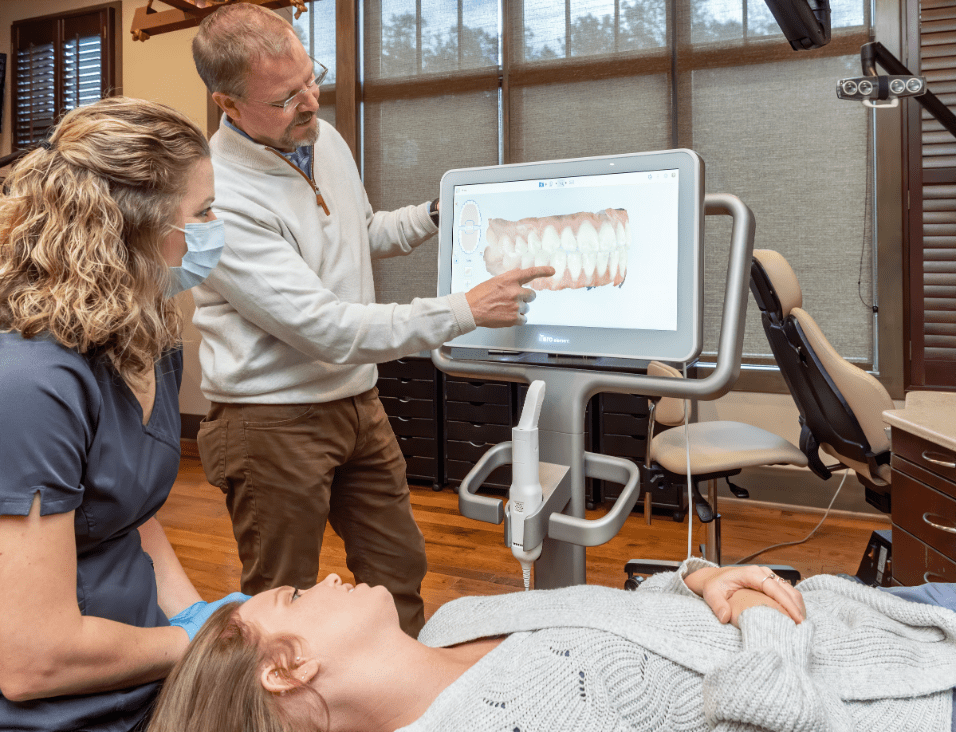
Treatment begins with a careful assessment. Dr. McInnis, an AAO-member orthodontist, uses digital scans to create precise 3D images of your teeth and jaw. This technology eliminates uncomfortable traditional impressions and provides detailed information for treatment planning at our Clemson location.
How Is Treatment Planned?
Based on your evaluation, Dr. McInnis develops a personalized plan. This determines whether you need:
- Space creation through tooth movement alone
- Palatal expansion to widen the upper jaw
- Selective extractions for severe space deficiency
What Is Active Treatment?
Whether you choose braces or clear aligners, this phase involves regular visits to monitor progress and make adjustments. Teeth move gradually into their new positions over time, with most patients visiting our Seneca or Clemson office every 6 to 8 weeks.
Why Is Retention Important?
After active treatment, retainers maintain your results. This phase is essential for preventing teeth from shifting back toward their original positions.
Treatment timelines vary based on your specific situation. Mild crowding might resolve in 6 to 12 months, while more complex cases can take 18 to 24 months.
Benefits of Correcting Dental Crowding
Correcting crowded teeth delivers both health and confidence benefits that last a lifetime.
How Does Treatment Improve Oral Hygiene?
When teeth overlap, toothbrush bristles and floss can’t reach every surface. This creates hiding spots for plaque and bacteria. Straight teeth are simply easier to keep clean, reducing your risk of cavities and gum disease. Many patients tell us their daily brushing and flossing routine feels noticeably more effective once their teeth are properly aligned.
Does Straightening Teeth Help Your Bite?
Crowded teeth often don’t meet properly when you chew. This uneven contact causes some teeth to wear faster than others and can strain your jaw muscles. Aligned teeth distribute biting force evenly, which protects your enamel and supports healthier jaw function over time.
Beyond hygiene and bite improvements, many patients tell us they smile more freely after treatment. That emotional benefit matters.
Other advantages include:
- Reduced risk of chipping or cracking teeth that stick out
- Improved speech clarity when crowding affects tongue placement
- Lower likelihood of developing TMJ discomfort
- Less chance of chronic headaches from jaw tension
Correcting crowding early helps you avoid bigger concerns down the road, because preventing dental complications is always easier than addressing them after they take hold.
Treatment Options Compared: Braces vs. Clear Aligners
Several effective options exist for correcting crowded teeth. The right choice depends on your crowding severity, lifestyle preferences, and treatment goals.
| Feature | Metal Braces | Clear Braces | Invisalign Clear Aligners |
|---|---|---|---|
| Best For | All severities, including severe crowding | Moderate to severe crowding with aesthetic concerns | Mild to moderate crowding |
| Visibility | Most noticeable | Less visible with tooth-colored brackets | Nearly invisible |
| Removability | Fixed in place | Fixed in place | Removable for eating and cleaning |
| Treatment Time | Often fastest for complex cases | Similar to metal braces | Comparable for appropriate cases |
| Maintenance | Requires careful cleaning around brackets | Same as metal braces | Easy cleaning; remove aligners to brush |
How Do Metal Braces Work?
Metal braces remain the most versatile option. They work well for any severity level and give your orthodontist precise control over tooth movement. Today’s brackets are smaller and more comfortable than older versions.
What Are Clear Braces?
These function like metal braces but use tooth-colored or ceramic brackets that blend with your teeth. They’re a popular choice for patients who want effective treatment with a subtler appearance.
How Does Invisalign Treat Crowding?
Invisalign uses custom-made clear trays that gradually shift your teeth. You’ll switch to a new set of aligners every one to two weeks. The removable design means no food restrictions and easy brushing.
For severe crowding, Dr. McInnis may recommend additional approaches like palatal expanders to create more space or strategic extractions when absolutely necessary.

What Affects the Cost of Fixing Dental Crowding?
The pricing of correcting dental crowding depends on four main factors: severity of the crowding, treatment type chosen, additional procedures needed, and total treatment duration. Mild cases requiring shorter treatment naturally cost less than complex situations needing extended care, and the type of appliance you choose also shapes the total.
Crowding severity matters most. Mild cases requiring shorter treatment are less than complex situations needing extended care or additional steps.
Treatment type also affects pricing. Metal braces typically represent the most affordable option, while clear aligners and clear braces often run more due to the materials and technology involved. If you need extractions, expanders, or other preparatory work, those preparatory steps add to your total, and longer treatment naturally means more office visits and adjustments along the way.
The good news? Most dental insurance plans cover orthodontic treatment, at least partially. At Upstate Orthodontics, we accept most insurance plans and offer flexible financing options to make treatment accessible. Everyone deserves a winning smile, regardless of budget.
We recommend scheduling a free consult to get a clear picture of what you’ll pay for your specific situation. There’s no pressure, just honest information to help you make the right decision.
Who Is a Good Candidate for Dental Crowding Treatment?
Patients of all ages can correct crowded teeth. Treatment works for children, teens, and adults alike, and we welcome smiles of all sizes at Upstate Orthodontics.
For children: The American Association of Orthodontists recommends an initial evaluation by age 7. Early assessment doesn’t always mean early treatment, but it allows Dr. McInnis to monitor development and step in at the optimal time if needed.
For teens: This remains the most common time for treatment. Permanent teeth have erupted, but jaws are still developing, which can make tooth movement more efficient.
For adults: Your teeth can move at any age. More adults than ever are choosing orthodontic treatment, and modern options like clear aligners make it easier to fit into professional and social life.
Before starting treatment, you’ll need good overall oral health. Any cavities or gum concerns should be addressed first.
Good candidates typically have:
- Healthy teeth and gums
- Commitment to following treatment guidelines
- Realistic expectations about timelines
During your consultation at Upstate Orthodontics, Dr. McInnis, an AAO-member orthodontist, looks at your specific situation and recommends the approach that fits your needs and lifestyle.
Frequently Asked Questions
Can crowded teeth correct themselves?
No. Dental crowding doesn’t improve on its own and typically worsens over time. As you age, teeth naturally shift forward, which often makes existing crowding more pronounced and can lead to increased wear, gum recession, or bite changes.
How long does it take to correct crowded teeth?
Most crowding cases resolve within 6 to 24 months. Mild crowding may only need 6 to 12 months of treatment, while moderate to severe cases can take 18 to 24 months. Your specific timeline depends on how much movement is needed.
Can Invisalign correct crowded teeth?
Yes, Invisalign effectively treats mild to moderate crowding. For severe cases, metal braces might work better. Dr. McInnis can determine which option suits your situation during your evaluation.
Do I need extractions for crowding?
Not always. Many crowding cases resolve through tooth movement alone or with palatal expansion. Extractions are typically reserved for severe cases where there’s simply not enough jaw space. Dr. McInnis takes a conservative approach and only recommends extractions when truly necessary.
Is correcting crowded teeth covered by insurance?
Many dental insurance plans include orthodontic benefits that cover a portion of treatment. Coverage varies by plan, so we recommend checking with your provider. Our team at Upstate Orthodontics can help verify your benefits during your visit.
Can adults correct crowded teeth?
Absolutely. Orthodontic treatment works at any age. Many adults choose clear aligners for their discreet appearance, and you’re never too old to improve your smile and oral health.
Ready to Take the Next Step?
Ready to help get your teeth in the right spots? Go here to schedule your free consultation with Dr. McInnis at Upstate Orthodontics. We have two conveniently located offices in Clemson and Seneca.